Showing posts with label codman square. Show all posts

Wednesday, February 03, 2010

I can't speak as the government


It's a beautiful day for a neighborhood, especially if that neighborhood is named Dorchester, Mass.  Can it get better than that?  I suppose it depends on where you live, but if you live in Dorchester, the chips are stacked in your favor.  A Dorchester address is like winning the lottery.  Every rainbow has a pot of gold at its end and Glory Begorrah!  Dorchester has its share of shamrocks.

You have junk in Dorchester and you have food.  You don't find junk food.  You can purchase potato crisps and potato chips, you can stock up on two-ounce boxes of Jujyfruits, there is more greasy pizza and Chinese takeout for sale in Dorchester than there is in the North End and Chinatown.  Dorchester is bigger than both combined.  That's how things shake out here; that's how the cookie crumbles and the fortune unfolds.  Dorchester nourishes.  The very air on the streets themselves offers a harvest of food for the soul.

I saw a woman crying on Washington Street in front of the post office off Codman Square.  She had just received a letter from her long lost brother.  She showed me the letter and I couldn't read the Haitian Kreyol.  A passing pedestrian translated.  "Dear Sister," the letter read, "I have heard of Dorchester and it sounds like the best part of Boston.  It may be the best part of America.  You are very lucky to live there.  Is there room in this fabled Dorchester for a poor wretch like me, a man with no luck, a checkered past, an honest man who has run afoul of corrupt policemen?  Is there room for a person who wants to live by his wits and ability?  Do you think I will fit in in Dorchester, that cream of Boston neighborhoods?  My visa has been approved.  Should I look for an apartment in South Boston instead?"

The translator told me the letter was over.  "I can't speak for the government," I said.  "I can't speak for anyone in Dorchester or Boston but myself, but this brother sounds like the person who moves here and succeeds.  There is plenty of room in Dorchester for people who want to make their lives better. "  I paused.  "Tell him that though I can't speak for Dorchester or for Mayor Menino, I can speak as an American.  Tell him I welcome him and I will be proud to shake his hand, man to man, when he becomes a fellow citizen of this great nation."

"Tell your brother," I whispered conspiratorially to the crying woman, "that he has the best long lost sister in the whole world.  She is a found sister and she has found him a place to put down roots and grow."

Saturday, January 30, 2010

Deceiving appearances

Ever wonder what's inside the fraternal lodges scattered around Dorchester?  Not just the American Legion and the VFW.  I mean the windowless buildings fronts that house the Shriners, the Society of Vulcans,  the Woodmen, the oddly acronymed H.O.G.S.I.C., or that mobile home parked on New England Avenue that has a bronze placard engraved "Society 11, A.E.I.O.U." posted next to the boarded up screen door.

I was out on the Dot last night and I was invited to one of these fraternal lodges this afternoon.  I am sworn not to say which.  I intended to make an expedition to the wilds of Newton to chase down a rumor of Dorchester immigration for business reasons, but an adventure close to home is always better than one that involves a journey.  

Know your surroundings like the back of your hand.  Know your surroundings like you know your soul.   If you don't know your neighborhood, you can't know yourself.  A city is a collection of people grounded in one moment in time in a particular place.

So I met up with some members of a fraternal order that also has a ladies' auxiliary branch.  Both male and female members were present when I arrived, to ensure I was worth granting a tour.  Though I knew the clubhouse address, I was blindfolded and led to our destination as a matter of protocol.  I didn't mind, though the passing cars honking as I was led down the sidewalk was a tad startling.

I can't reveal what transpired after this.  Let me only say that the peeling paint and darkened windows on the outside of these private clubs is not indicative of the furnishings inside nor their civic pride or involvement.  Any community that hosts such a panoply of private organizations only does so because public organizations don't serve the job they are intended.  Because people don't jump on City Hall's bandwagon doesn't mean they are disengaged.  Quite the reverse.

The picture that opens this report is a hint of what I found a block or three from the center of Codman Square.

I'l leave it up to you to guess what the actual address was.  It was a very interesting afternoon, but without many surprises beyond the decor.   You can't live long in Dorchester without noticing the positive impact ad hoc societies have on the body politic and the body civic.  No expects the top tier, governor- or mayor-appointed  boards of development, commerce, tourism, industry, investment, job creation, beautification, arts advancement, race relations, or home garden produce promotion to do much work at Dorchester's street level.  Those who wait are lost.  

Dorchester waits for no one.  It moves forward, inexorably like a glacier.

Sunday, January 24, 2010

Good girls say YES!! to Dorchester


Good girls know that when someone offers to take them to Dorchester, the right answer is YES!!  Bad girls can't stay contrary to their better natures in Dorchester.  Good and bad people only getter better.

For all the bad reputation Dot has around Boston as being home to barbarians, it is really home base for a very conservative citizenry.  Blue collar, salt of the earth burghers: this is the description that applies to most Dorchesterites.  Open minded, accepting, minding one's own business, avoiding trouble: these are Dorchester attributes.  Dorchesterites are more buttoned down than doubling down.

Very few people are experimenting with their sexuality in Dorchester so much as they are just enjoying it.  They aren't pushing boundaries so much as insulating themselves within two-way nourishing relationships.  The nuclear family is alive and well in Dorchester though its constituent parts may defy some people's demographical preconceptions.

People from Oklahoma may visit Dorchester and be shocked at what they see.  Dot is the ultimate sub-urbia conflated to metropolitan proportions.  People of all colors, creeds, and inclinations rub shoulders and press jowls.  Those most familiar with each other often rub and press other parts, but usually in selective pairs behind closed doors.  Don't go looking for what you don't want to see and all will be well.  That's a Dot lesson if there ever was one.     

Some parents worry when they learn their student children are settled in a Dorchester rooming house.  They needn't be.  Traditional values are valued in Dorchester.  Overall, it is as dull here for a hedonist as it is in New Alexandria, Penn.  A typical Dorchester day consists of children going to school, adults going to work, and those not doing either running errands and tending their gardens.  Nights transpire to a symphony of snoring.  Even a Puritans quickly get bored sniffing out sin in Dorchester tap rooms.

Good people say Yes!! to Dorchester's invitation for a good life.  It is a paradise for those who aspire to a middle class lifestyle made up of the tastes and values the bourgeoisie hold dear.  Those values are very near in Dorchester.  They are so close at hand you can smell them when you disembark from any Red Line train south of JFK/UMASS.

Monday, December 28, 2009

Codman then and now


I read a memoir by a man who had grown up around Codman Square during the Depression.  I can't remember the name of the author.  He is (was?) a professor of Romance Literature at BU, I believe.  I checked it out from the Mission Hill Library (of all places) and the cover featured a snapshot of him as a teenager blowing a bugle at Boys Club Camp.  I'd like to remember the name of the book to add it to my collection.

The point of the matter is that the Codman Square he describes isn't too much different from the Codman Square of today.  Some of the stores have changed, drugstores don't have soda fountains for instance, and the high school isn't located nearby, but the fabric of the neighborhood is similar.  The populace is made up mostly of working class folks, a few well off but many more working harder to get by.  He describes income insecurity and a need to move because landlords got tired of being stiffed for the rent.  Grocer's don't extend credit anymore (I think) now that there's WIC.  Alcoholism was the social scourge rather than other drugs.  Nowadays there are just more choices.  Urban street culture was still thought of as thug life rather than cosmopolitanism.

Codman Square seventy or eighty years ago was similar to Codman Square today.  One major difference is the complexion of the people who live there, not their aspirations or abilities.  Minorities make up the swell of the citizenry, though from the inside looking out, people of color are the majority in this part of Boston.

Though a person can combine both attributes, a bigot needn't be a racist, though the two often go hand-in-hand.  A bigot is someone who is intolerant of those unlike his or herself, no matter their color (see the commentary on our December 24th post.) The recent film "Gran Torino" from Clint Eastwood featured a racist who discovered he wasn't a bigot after all.  He came upon this realization from staying in one place while his surroundings changed, and not, for all intents and purposes, for the better. He didn't have to stop being a racist.  He didn't need to.  He did stop being a bigot.

Everyone harbors some race-related notions.  These are more cultural and socio-economic, upon examination, and they can serve as useful shorthand to navigate situations.  When they become the only criteria to guide one's judgement, one's circle of potential allies shrinks because no one is an ambassador for a gene pool.  We are all individuals with the same needs and desires.  No one wakes up in the morning wanting to do the wrong thing, no matter how they may define what's right.

As a Euro American, I am classified as white.  After asking if I am non-hispanic, government forms have no more use for my ethnicity.  My skin gives other people certain cues as to how I might act, what I might think, how I might expect to be treated.  It is a curse, but one borne more lightly than other people's burdens.  I know that black people are different from me.  Their skins are darker.  Though African Americans come in as many shades as personalities (much like Euro Americans within different gradients) 'black' like 'white' is shorthand, meaning little and certainly not meaning black.  I suppose 'brown' never came into fashion because 'white' people brown in the summer.

As much as I love the word octoroon, I've never been very interested in genealogy.  It's too much irrelevant information to consider when labeling someone.  I prefer to think of most people as potential friends.  That seems to be the way around most of Dorchester.  There are differences, but we all tend to get along.  The older you get, the less fight...the more you work together.  Longevity breeds patience.

Dorchester's population is stable, growing a bit even.  It will never be 1940 again or 1970.  We will never be young again.  The complexion of the neighborhood will change again and again with fresh faces.  That doesn't matter.  What matters is that there is a Dorchester, a place where people come to take their chances, make their mark, and try to get ahead without holding anyone else back.  That's the Dorchester I live in.  It's a place remarkably free of bigots.


Wednesday, December 23, 2009

Two Dorchesters


I've been thinking about a statistic I read in the Globe recently.  I'm not going to look it up or link to it because it's a stat that's already been stuck in my mind.  How accurate it may be, I haven't researched, but some variation is part of common, ingrained perception and, quite likely, part of common reality in this part of Boston.

The average household income in Dorchester is $28,000 a year.

Whether that sounds like a lot or a little depends on where you begin to measure.  For our regular readers who live in Hinton, West Virginia, it's a little for the Boston area.  Very little.

Living where I do, by the JFK/UMASS MBTA station (that's the subway to you Hintonites), I don't see any abject poverty.  Believe me: $28,000 will not support a nuclear family in Boston.  The rent on a two bedroom apartment will consume half that and more, not including utilities.  This may explain the lack of nuclear families in Dorchester, but again...I don't see a lot of single parent households where I live, not that I'm taking a detailed census or spying on my neighbors.

Some parts of Dorchester are like the part I live in.  Adams Village, Neponset, Pope's Hill, Ashmont Hill, Jones Hills, Mount Bowdoin, the Polish Triangle, Point Norfolk, Lower Mills; they are all fairly stable, middle class, whatever middle class means.  Let's say the people I pass on the street don't seem to be going without.  They are also primarily located near train stations and they are also predominantly white.

I do not like to dwell on racial differences on the Matrix.  I usually make it a point to avoid discussing them, but they exist.  Different parts of Dorchester have different ethnicities, to be sure,  The same differences in skin color and income that demark other places also occur in the Dot.  It isn't pretty, but it is true.  Sometimes it's good, sometimes not.  Again, it depends on where you start to measure.

If I looked at the tax records for my neighborhood, I suspect the average income isn't dragging the neighborhood average downwards.  This part of Dot is full of college students working part time jobs, but they are paying market rate rents and living, as some scholars do, at the local bars soaking up cheap food and suds.  Just eyeballing the lay of the land, I suspect what lowers Dorchester's median income figures are the neighborhoods roughly west or northeasterly of Washington Street: Four Corners, Codman Square, Talbot Avenue, Norfolk Avenue, Columbia Road, Blue Hill Avenue, East Cottage Street, Bowdoin/Geneva, and other terrain that doesn't have names for its neighborhoods, just a collection of pins on a police station map.

There are two Dorchesters.  Both of them are equally welcoming and equally convivial. I've never witnessed a crime being committed in Dorchester and I have been down most streets and I am out most hours of the day and night.  I have never been uncomfortable.

There is a different culture to the west than there is to the east of Dot Ave, which is an approximate, handy boundary line.  The east is whiter and more asian (whether Vietnamese or Chinese it's hard to say).  The west is darker and more hispanic (or Haitian or Cape Verdean).  You can't really say one side is old Dot stock and the other side is new.  African Americans have been a majority in some parts of Dorchester for more than half a century.  They aren't immigrants.  They are Dorchesterites.

East plus West equals the middle ground, which is somewhere near Field's Corner.

I've been thinking about this over the past few months and, unlike my usual folderol, I thought I would work through more serious musings in public.  I'm trying to develop a Dot-view that is more panoramic than the one I have now.  As I say, I have been almost everywhere, but as a transplant, I have been almost everywhere as someone passing through, or as someone from Savin Hill,  rather than as a native.  A fellow citizen, perhaps.  Some people live in a Dot microcosm.  I am  one of them.  I want to take in more of the macro view.

I don't usually solicit comments but I invite you to add your observations and thoughts.  Let's discuss.

Wednesday, September 09, 2009

The guy with the Spanish Fly

A black market haunts Dorchester. Illicit substances are being offered up for sale on street corners in Field's Corner and Codman Square by shady characters who don't have pharmacist licenses. Potential customers looking to spice up their love lives or attract someone of the opposite gender, or the same gender, are warned not to trust street vendors offering love potions. What you think you are buying may not be what you are getting.

I was riding my bicycle along Freeport Street last evening and one such suspicious character waved and hissed, "Psssssssst!" I slowed down. "I think I've got something you might want,"he said and he held out a vial, cupping his hand so that only I could see its contents. "Pure Spanish Fly, the best kind," he said. "Guaranteed," he added, flashing the USP label promising 10mg of powdered lytta vesicatoria per tablet.

I demurred, "I don't think I'll have much use for that. I rely on my natural animal magnetism." The pusher wasn't so easily dissuaded. "This is a hot ticket," he said, "It's the real deal. Look, bub, all the real players are buying off of me and scoring like Madoff if he were a gigolo. I have so much repeat business, I'm running out of stock." I said I'd think about it. I told him I was headed up to Codman Square and if I changed my mind between here and there I'd be back. "No need for a return trip, my friend," he said. "I've a partner in Codman and his merchandise is just as good. Go to the corner of Washington and Melville. Ask for Squinty. He'll set you up."

As often happens, I got distracted and ended up in Neponset rather than Codman so I never met Squinty, not that I ever intended to. When I got home though, I did a little due diligence. It turns out that Spanish Fly is illegal in the United States and, labeling notwithstanding, most preparations don't contain what they promise.

Today's lesson: don't buy drugs off the street. There's another lesson too: don't buy illegal drugs, but that isn't demonstrated very well by this story. Dorchester is a neighborhood of many temptations.

Wednesday, August 26, 2009

Dot riddle

Q: What comes after 75? A: The Spirit of Dorchester.

A fact that is as little known as it is uninteresting is that I don't wear sunglasses, just clear, prescription lenses. There's no dogmatic reason really. Natural light doesn't bother me, I don't want to carry an indoor pair of glasses and an outdoor pair... You say they make lenses that change with the light now? The next thing you'll tell me is that I can send a written message without a stamp! I just never got into the habit of wearing sunglasses and thus have never missed them. A simple man of simple tastes who generally leads an uncluttered life.

When I lived in Connecticut, I didn't have to wear a motorcycle helmet. Not having to, I didn't. Since moving to the intrusive nanny state of Massachusetts I am forced to wear one and I've gotten used to it, so much so that for the past year I've been wearing a full face, astronaut model. The face shield was getting a bit too scratched for rainy night driving, so I purchased a new one recently. The old one was clear, no frills as befits my usual tastes. The new one is polarized orange with full UV protection. I used to ride all the time with the old face shield up. Since getting the new one, I keep it locked in the down position.

It's like driving through a different world. Details are clearer and colors are sharper. Though I am looking through an orange window, the greens that paint Boston's many trees are greener than anything I've ever seen. I took a longcut home through Franklin Park today and, since traffic was light and it was good weather for girl watching, I meandered to Codman Square via Washington Street.

Once I stopped in Codman, I parked my trusty motorcycle in an available gap between a delivery van and a Ford Focus and stretched my legs. Since only a fool walks around town wearing a full face helmet with the shield down, I carried the helmet on my forearm.

I sat on the steps of the Great Hall and looked across the street at the front lawn of the Second Church. The grass was waving in the breeze and the trees whispered sweet nothings that travelled over the intersection, over the rooftops, and into the alleys while whisking breathily and unhurriedly along the main streets and the side streets, mingling with the hum and rattle of vehicular traffic and underscoring the conversations, both urgent and idle, and the tapping or padded footfalls of pedestrians. I put my helmet on to take in the view with polarized vision and I took it off to see it again with untinted eyes.

I'll tell you what: Dorchester is best experienced in the round and in the rough, without filters. It's a beautiful, vibrant place that doesn't need to rely on gadgets or spiffing up. True, some places could use a coat of paint but just to freshen up, not to whitewash. This is no Potemkin Village. Warts and all, Dorchester is pretty plumb easy on the eyes.

There have been two murders in the past two days in Dorchester. That's nothing any civic leader will crow about, but in a dense neighborhood of more than 100,000 people, these regrettable things happen. And, while they are regrettable, they are out in the open, reported, and investigated. People discuss local current events and try to get involved in being a cure rather than a symptom of any overwhelming civic malaise. Dorchester is not lawless. Neither is it falling apart. With so many people packed so tightly together in many different income brackets and at so many different levels of desperation and unbalance, Dorchester is holding together at the seams quite nicely, all things considered. The bond of the social glue is still holding tight. The human condition is playing out according to rhythms etched in all of our collective DNA. Ugly things can happen in beautiful places. Dorchester is proof of that.

Did you know that people even get murdered in Hawaii? That doesn't stop tourists from visiting that island paradise even when it is farther out of their way than Dorchester is.

Q: Knock! Knock! Q: Who's there? A: Lettuce. Q: Lettuce who? A: Come to Dorchester and you'll find out. You will be pleasantly surprised.

Friday, June 26, 2009

Dorchester Baked Beans

I was sitting on the back porch at Margaret Noddle's home on Wellesley Park, a few blocks northeast of Codman Square. It's a lovely neighborhood combining the charm of the Back Bay with the wood framed construction of Dorchester's older, pricier homes that haven't been converted to apartments or condominiums. We were sipping sangria and noshing on antipasto when Mrs. Noddle asked me if I had tried Dorchester Baked Beans yet.

"I've had Boston Baked Beans candy," I said, "And I've had baked beans for breakfast at McKenna's. Is that what you mean?" Mrs. Noddle said, no. She meant beans baked the Dorchester way. "What do you mean?" I asked.

"My grandmother passed down a recipe for making baked beans that is very similar to the bean crocks you'll find all over the Dot. My recipe may be unique to my family but you'll find similar variations all up and down this street. Dorchester has a particular way of treating beans for supper that is very different from the way you'll find them in the rest of Boston." I asked her to share here secret. She did.

"You start with two cans of beans," she started. I interjected, "Canned? Not dried?" Mrs. Noddle frowned at this early interruption, "My grandmother said she soaked dry beans when she was younger but canned is just as good." I interjected again: "What kind of beans?" Mrs. Noddle furrowed her brow and shook her head to signal that I should stop interrupting. She said, "It doesn't really matter what kind of beans as long as they're soft. They can be kidney beans, black beans, navy beans, whatever. Once they're done cooking they all taste the same."

Rearranging her skirts around her legs and refilling her sangria glass, she continued. "You simmer two cans of beans until their about ready to fall apart along with a large diced onion and a generous pour of molasses. With canned beans you don't need to add salt but you should add some black pepper. It doesn't matter how much molasses you use, this recipe is based on the traditional Boston model so they can't be too sweet. Like most things, more is better. The next ingredients will level the field."

She took a sip of sangria. The sun was setting over the roof lines on the west side of the street. "When you put the canned beans and their juice in the pot with the onion and molasses you need to add two jiggers of whiskey. Four Roses Bourbon will do. You don't want to use good sipping whiskey but cooking whiskey. This makes for soupy beans I'm afraid and my grandmother knew how to deal with that. She always added oatmeal to the mixture to make sure that the meal would be hearty. Just enough oatmeal to soak up the juice as everything simmers."

Mrs. Noddle sipped from her glass again. "Just around the two hour mark," she continued, "My grandmother would add what she called spring onions. That is, she picked some of the onion grass that grew in our lawn. I use scallions from the supermarket myself but lawn onion is more traditional. She also used to add some shredded cabbage when I was younger but after I was twelve or thirteen she substituted cabbage with shredded collard greens which had been showing up at the green grocers. I still use collards because I think they add a bit more earthiness than cabbage does."

I stopped the recipe at this point. "Do you mean to say," I asked, "That this is a dish of beans and oatmeal and collards?" She assured me it was, as well as whiskey, molasses and onion. "That must be a fine how-do-you-do come daybreak," I remarked.

Another sip of sangria and another stern look accompanied Mrs. Noddle's response. "My grandmother always said regularity is the key to a long life. She lived to be 77. My mother subscribed to that and she lived to be 86. I subscribe to it too. Why do you think I look so young? I attribute it to clean living with plenty of fiber in my diet as well as frequent moisturizing." I conceded that Mrs. Noddle doesn't look a day over 58 years old even though I know she is 63.

She blushed and accepted the complement. Then she continued. "You put the greens in about a half hour before you're done cooking it's a two or three hour process. The greens have to be as soft and mushy as the oatmeal when you're done. A bowl of these beans will stick to your ribs and get you from sun up to sun down. I had a dish for breakfast this morning and that's why I can sip sangria with you and just nibble at fruit slices and ham slices and a few crackers on the porch and not think one whit about having dinner tonight. I'm not the least bit hungry." She said this obviously pleased as she patted her trim midriff under her blouse.

"Would like to have breakfast with me tomorrow, Mr. King?" Mrs. Noddle asked, "I have plenty of Dorchseter Beans left over for another meal." I replied that my next engagement was at Peggy O'Neils where I was meeting some entrepreneurs to go over a business plan that should last well after midnight so I wouldn't be able to breakfast at the early hour Mrs. Noddle is accustomed to on Saturdays. "Another time, perhaps," she said. We agreed.

Saturday, June 20, 2009

The Flying Dotman

The Peppermint Squad, that intrepid gang of motor scooterists pledged to patrol Dorchester's tangled streets to promote Justice, Tolerance, and the Dorchester Way, have a legend that they share on rainy nights in their headquarters in Codman Square. It's been a rainy week in Dorchester and the squad was kept in home base most evenings, performing minor repairs to thier mounts and emptying bottles of Hoffenreffer Private Stock. The close quarters and malt liquor and repetative tap-tap-tapping of raindrops on the rooftop lent themselves the sharing of scooter folklore.

Cherrypicker asked Raisin, "Have you seen the Flying Dotman yet?" Raisin is a newcomer to this band of merry vesparadoes. Every rookie is called 'Raisin' until he or she has earned his or her 'peppermint-handle,' a monniker that cements their place in the squad's hierarchy. Raisin replied, "I've never even heard of the Flying Dotman."

Agent Widowmaker, who had been adjusting the brake cables on his "Princess Go-Go" Chinese scoot, looked up. "Beware the Flying Dotman, Raisin. You're lucky you've never seen him." Widowmaker looked dead serious and spoke in baritone though his voice is usally a bit higher pitched.

"Who's the Flying Dotman?" Raisin felt his comrades were pulling his leg. Tweedledum pulled up a milk crate next to Raisin and, after settling in and taking a pull of Private Stock, told this story:

"On foggy nights when the moon is full, a specter haunts the skies above Dorchester Bay," he began. "No one knows how or why, but a doomed scooterist rides the fog on nights like that. He's an old-timer by the look of his ride. He steers a Honda Super Cub looking to find his way to the Great Beyond. Locals call him the Flying Dotman because sight of him portends an impending crash."

Tweedledum continued. "I was on Morrisey Boulevard one night, after a few pops at Tom English's, when I saw the Flying Dotman. He must have been forty feet tall leaning around a fog bank on his Super Cub faster than I would ever take a curve like that. He was glowing with an eerie light, surrounded by a green nimbus. Apparently, when he was alive Massachusetts didn't have helmet laws becasue he was only wearing a painter's cap. He took the turn and sped off in the direction of Mattapan, disappearing into a passing cloud. When I got home, I mustn't have put my kickstand all the way down when I parked because my bike was flat on the ground the next morning."

Raisin shivered. "I'm not going down Morrissey any time soon on a foggy night," he said.

"I wouldn't advise it," Tweedledum replied. Widowmaker nodded in agreement. Cherrypicker said, "Who's going to make a run to ODB Liquors? We're running low on liquid refreshment."

Tuesday, April 28, 2009

Good company

There isn't a mass exodus out of Dorchester. It is quite the reverse. People are moving in droves, attracted by low rents, easy amenities, creature comforts and that certain Dorchester je n'est c'est quoi that no one can put their finger on. It's as apparent at the Sugar Bowl as it's apparent at the Mud House as it's apparent at Saint's Diner. Dorchester exerts a magnetic pull that attracts the iron in Bostonians' blood. Going out of business? Not in Dorchester.

Red Line ridership is up and we don't mean the Braintree branch. People are flocking to the stops headed toward Ashmont, Ashmont itself, and on to Mattapan beyond. UMASS Boston and Laboure College are located in Dorchester, but this isn't the most academically minded part of Beantown. This is the working part of the city, full of regular Johns and Janes and Luk Nows and Mimis and Taneshas and Marys and Tyrones and Nathans and Bryces and Toms, Harrys and Charlenes. This is the place where chowderheads and chuckleheads and layabouts and tramps and gypsies find a place to lay their heads and get by, one day after another. The fish are jumping in Dorchester Bay and the living is easy further inland.

Smart boys live in Dorchester. Smart girls do too.

Wednesday, April 15, 2009

Uncle Lumpy

Everyone calls him Uncle Lumpy. He likes to sit in Mothers' Rest park on Washington Street watching the clouds and the traffic go by. It's a nice place to do it. He settles onto a bench like a sack of soggy oatmeal, lets his head droop onto his chest, and just sits in the seat of the contented. He can sit for hours at a time.

He isn't related to anyone in Codman Square as far as anyone knows. He's just a kind of fixture in the neighborhood. No one has followed him home to his front door, but rumor has it he lives on Alpha Road. Children call him 'uncle' because he is kind to them. He hands out coins when asked for the gumball machines at the grocers'. Unfortunately, most of the machines only take quarters nowadays and Uncle Lumpy mostly has a stockpile of pennies. No matter. Children know that a shiny penny is better than nothing and that enough of them can be exchanged for silver.

Sometimes he nurses a bottle of Old Colony brand Uva Soda. It's grape flavored and very sweet. He can an hour to finish it. Then he walks back to the market to collect his nickel deposit. He usually only holds onto the nickel no longer than a block before he donates to a child.

Saturday, March 21, 2009

Peter Lorre Eyes

Laurie Masters, who lives on Tremlett Street, is certainly the biggest Peter Lorre fan in Dorchester, and is probably the most devoted Lorre fanatic in all of Boston. She is twelve years old and has memorized most of the lines this character actor ever spoke on film.

I visited the Masters' household on Tremlett Street and, indeed, there is a shelf in the family's DVD collection dedicated to the work of Peter Lorre, from his first 1929 appearance in Die Verschwundene Frau to his last, in 1964's The Patsy. There are also stacks of old comic books and movie magazines full of both fictional and factual adventures of Laurie's hero. Why would a young, 21st century, tween girl fall in love with a film star who began his career before the Great Depression? To find out, Laurie, her mother, and I discussed it over #3 Value Meals at the Mc Donald's in Codman Square.

Laurie explained, "We have the same name." I pointed out that the subject of her admiration was born László Löwenstein. Laurie replied, "But he changed it to make it better." I couldn't argue her point, at least from a typographical point-of-view. I pressed further to discover what made him attractive to her. "He has the eyes a girl can fall into and lose herself," she answered. "When I get married," she continued, "I want to marry a man with Peter Lorre eyes." She probably won't have much competition.

Ms. Masters then stood up and started to perform impersonations of her hero. She recited lines from The Maltese Falcon, from Casablanca, and from the various Mr. Moto films and she did it all in perfect imitation of Mr. Lorre's accent and mannerisms. She was at ease and the dining room wasn't overly warm, but she appeared to be nervous and sweaty. If it weren't a skinny, under aged, African-American girl speaking the lines, people would have thought Peter Lorre had returned from the grave. Laurie's mother dipped a french fry into the cup of barbecue sauce we were sharing and then wiped her fingertips before patting my hand. "You see," she said, "Laurie loves the Mr. Moto movies the best."

Do lightning and genetic combinations strike twice? I hope for Laurie Masters's sake she finds her dream man. It may take her awhile (doesn't it always?) but if a modern day Lazlo Lowenstien exists in Dorchester, we are sure this young lady will find him someday.

Peter Lorre's least favorite role, but Laurie Master's pick from his oeuvre:

Thursday, March 12, 2009

Dorchester is on Flat Stanley's itinerary

We have it on good authority that Flat Stanley, a sort of literate, elementary school celebrity will be making an appearance in our very own Dorchester, Mass.. He is riding that federal mass-transit system, the US Postal Service to get here. His host is anxiously awaiting the guest's arrival in order to show him the sights of interest and a good time.

If I were six or seven or eight years old, what would I like to see in Dorchester? This is going back aways. I would be enamored by all the potato chip flavors stacked at Cappy's Convenience. In warm weather I would want to pluck all the periwinkles off the sand at low tide on Malibu Beach even though no bucket has been made big enough to hold them all. I would enjoy rocking along the Mattapan High-Speed Trolley wondering what the conductor is doing behind the curtain and if he would let me help him steer. I would be the most contented boy in the world on the bridge over the commuter rail tracks eating a long, Simco hot dog with the perfect mix of mustard and relish while a train passed under my feet. I would be dizzy by all the people milling about in Codman Square and in Uphams Corner or in Fields Corner; so many adults pursuing adult business and me none the wiser what was about beyond the fact that it is always this busy every day. I would enjoy the view from Ronan Park of the Bay the compressed natural gas tanks, and the sports fields as well as the playgrounds.

What is a boy to do in Dorchester? The same as an adult. Enjoy it all. For a real meal Flat Stanley can expect a stroll down Dot Ave's Umami Mile. What restaurant he'll be inclined to choose is anyone's guess, but you can bet it will be a good one. No bad times are had in Dorchester.

Saturday, February 14, 2009

The play is the thing

We watched young lovers strolling Codman Square this afternoon. It wasn't clear whether Valentine's Day made them feel more affectionate or not. They just seemed to be doing what came naturally.

Though it is mid-February and feels like it, flowers were on the streets. Both men and women were carrying bouquets, either to give or after having received. Carnations, roses, and babies' breath bobbed with each step as couples sauntered to Shawmut Station or Peabody Square. The cars on the Red Line were like greenhouses full of out-of-season flowers. The scents of pollen and love were in the air.

At the Codman Square Branch of the Boston Public Library, we witnessed a teenaged boy deliver a hand made card to a similarly aged girl. "Will you be mine?" he asked between the racks. "I will," she answered, and the two exchanged a quick hug and a peck before they could be accused of making a disruptive, public display of affection.

It's a shame Dorchester no longer has a cinema within its boundaries. Dinner-and-a-movie is the classic date for young people in love. Myself, I am forced to squire my intended to Cambridge to view 'Casablanca,' the most romantic movie of all time. It is playing at the Brattle Theater. As we write this all shows are sold out. I was caught flat footed in line last Valentine's Day but this year I had the foresight to buy tickets in advance. After the movie, we'll be taking the Red Line to Fields Corner for a little post-cinematic snack and frivolity.

Sunday, January 11, 2009

The dancing Dot

I was enjoying some coffee and dry toast at Saint's Diner in Codman Square this morning when I was approached by a fellow customer. "Hey, Mr. Writer," he said, "You know not all of Dorchester is Irish." I looked around at the obvious and replied that I'm not of Irish descent either. "Then why do you always use the Irish when depicting the spirit of Dorchester?" He was referring to yesterday's report on the Dotusi, a dance that marries Irish step dancing with 60's era, camp, go-go moves. It was one of those moments that showed the power of the internet at work.

I explained that I can only relate things as I find them and that I have often commented on Dorchester's Vietnamese element and the African-American culture around Codman and Morton Street. I have reported on the Polish enclave near Andrew, and the Cape Verdean community around Uphams Corner, and the polyglot international students that live around UMASS Boston. I suggested that if there were really to be a dance to represent the spirit of Dorchester, indeed, more parties would have to be involved in its choreography. Did this gentleman know anyone with the expertise?

"I have a cousin who danced in a few Snoop Dogg videos. She's got some Dorchester moves that make Riverdance look like a cake walk. She didn't like your description of the Dotusi either."

I suggested she get in touch with the dancers in Neponset for some collaboration. The gentleman agreed to put this suggestion to his talented cousin. We will see what comes of the cross-pollination. Anyone else willing to lend their sense of rhythm to this project is encouraged to do so but, as with most things, we don't believe a committee is the best means to achieve artistic expression.

Dorchester is a multi-faceted jewel of a place full of folk carrying DNA from around the globe. No one strand dominates the others. Dorchester is, in fact, a sprawling jelly of a place that jiggles and sparkles according to the jostling of its many constiuent ingredients. There won't be one Dorchester dance in the end, but many, as befits a place made up of so many feet, each moving to their own beat.

Saturday, December 20, 2008

Selling ice to eskimos

Chauncy Dibble trudged through the snow this morning with a grocery cart packed with a card table, paper cones and bottles of syrup. He believes that today, in the aftermath of yesterday's blizzard, is snow cone weather. "The raw materials are here for the taking."

He set up shop at the intersection of Lithgow Street and Talbot Avenue, not the busiest place for automobile traffic but pedestrians travel back and forth between Codman and Peabody Squares, either to pick up sundries on Washington Street or to catch the T at Ashmont Station. Mr. Dibble unfolded his card table at 9:30 expecting to tuck a tidy profit into the pockets of his down parka. "Sure you can just bend down and scoop up a handful of snow," he said. "I add that little bit of tropical sweetness that makes you forget you're in New England. When you eat a cone, you're happy to have the snow."

Mr. Dibble has an array of bottles on his table: Pomegranate, Mango, Passion Fruit, Watermelon, Sour Cherry, Pina Colada, Banana-Raspberry, Guava, and Clementine. We happened upon him at 2:00 this afternoon while he was filling two paper cones with snow from the sidewalk and drizzling one with Passion Fruit syrup and the other with Guava. Minnie and Millie Blackstone were his customers and both said they would never have thought of enjoying a snow cone today until they saw Mr. Dibble's display. "He's very convincing," Minnie said. "I'm really looking forward to the rest of my walk to Walgreen's," Millie said.

Chauncy Dibble explained that he chose his location because the intersection of Lithgow and Talbot is protected from the splash of plows and passing trucks so the snow retains it virgin quality throughout the day. He is armed with an oversize serving spoon that he uses to pack the paper cones from a pile he keeps replenished from nearby lawns and walkways. He says, "The neighbors don't mind me harvesting their snow for profit. I promise to keep the paths to their front doors clear and they wish me well." How's business? Mr. Dibble is coy about the numbers but he did remark that he expects his children to have a happy X-mas this year.

The Guava cone tastes like real guava.

Monday, December 15, 2008

Strong medicine

When we introduced local beekeeper Leon Murphy yesterday, space constraints prevented us from reporting on a sideline he's developed from his hives on Norwell Street. We were eating pancakes at Saint's Diner in Codman Square when he explained it to me. In his words:

"An old, Haitian woman down on Morton Street heard that I raise bees and she came to me to purchase fifteen of them because her great-granddaughter had the croup. I didn't sell live bees at the time so I asked what she wanted them for and she gave me her recipe for croup cure. She took fifteen live bees and ground them in a mortar and pestle. Then she steeped the mash in boiled rainwater. After eight minutes she strained the tea through a cheesecloth and then squeezed every last bit of juice out of the bees. She said a teaspoon of this bee tea every hour along with rubbing chicken fat on the baby's neck and chest would cure the croup.

"I was skeptical but I sold her the bees, fifteen exactly for $2.50. Soon enough other people with croupy babies were knocking at my door. I figured, heck, I've got enough bees so I started making the tea myself and putting it into old pickle and peanut butter jars to save people the time of having to crush the bees themselves. It's not fun to do. It's worse than putting a lobster in a pot. They crunch. I even bought a mess of chicken fat from a friend I have in Newmarket and wrapped it in little packages of wax paper to go along with the tea. I charge twelve dollars a cure and I've got batches of the stuff in my hall pantry."

I said this sounded like a sound product. Leon Murphy replied, "You know what else? Even if you don't have a croupy baby it's good stuff. It's a love potion. I gave a few jars to my sister, Adelaide. She spiked her boyfriend's vodka and cranberry with it one night, without the chicken fat, of course. He proposed to her the very next day and they've been happily married for thirteen months. He's got eyes for nobody but her. There's power in my bees."

I didn't want to burst Leon Murphy's bubble. I've run into his brother-in-law a few times at Ka-Carlo's on Hancock Street. This chap is a tomcat of the first degree, flirting with the ladies and making time with whoever will answer his mating call. That said, I've also met Adelaide Murphy while she was still known by that name. Any man would love her.

Sunday, December 14, 2008

A bit o' honey

Dorchester beekeeper Leon Murphy of 202 Norwell Street expressed his concerns over next year's honey crop. Mr. Murphy's hives have so far survived the blight that has been ripping through bee stocks around New England but he is concerned that no matter how much extra care he takes of his charges they may not bring in the revenue they used to. He is afraid a number of factors beyond his control may collude to bring his sideline apiculture business to an unfortunate end.

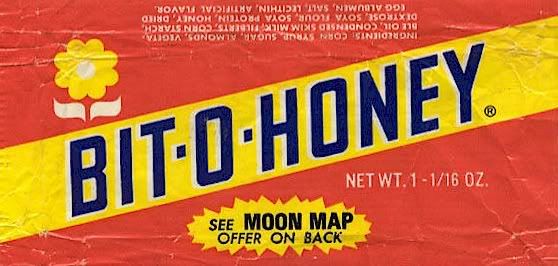
Mr. Murphy pays his rent and other regular, monthly expenses changing tires at a shop on Blue Hill Avenue. For frivolities and nights on the town and philanthropic endeavors, he relies on the bees he keeps in his back yard and the honey they produce. He sells most of his honey either to a dealer who operates a farmers' booth at Copley Square, to the Saint's Diner in Codman Square, or by a lucrative deal he arranged a few years ago with the makers of Bit o' Honey candy through a Haymarket wholesaler.

We were at Saint's Diner on Washington Street enjoying pancakes drizzled with some of Mr. Murphy's home grown honey when he told me what was troubling him. He said, "I'm afraid the flower gardens won't be as expansive as they have been. With the economy and all, people won't be putting the top notch flowers in their beds. My bees visit gardens all over Dorchester, collecting the pollen and bringing it back to Norwell St. Sometimes they get as far as Roslindale or Milton or Southie, but their bread and butter is here in Dorchester, especially around Melville Avenue. If people aren't going in for expansive, expensive, fancy gardens next spring, I think my honey might suffer."

Leon Murphy explained the mechanics of honey production to me while we ate our pancakes but I won't bore you with the details here. In summary, he believes the mix of perennial and seasonal flowers unique to Dorchester allow his bees to produce a honey superior to most others on the open market. He told me, "A Swiss gent from Nestle came to my apartment two years ago to taste my honey. I dipped a McDonald's coffee stirrer into one of my kitchen window combs for him to take a taste. As soon as he put his tongue to the gold he called up my agent in Haymarket to seal the deal. He had a German accent and he said right where I could hear, 'Dis honey is sehr gut!' I've been getting a good price for everything I can harvest since then. I don't want that market to dry up."

I tried to cheer up Mr. Murphy by telling him not to believe everything he reads in the papers. The economy is sound. He didn't seem convinced when we shook hands and parted ways. "I hope you're right," he said, "I hope people still like pretty lawns next year. If I'm going to give to my church the way I have been, I'm going to have to sell more than a little bit of honey. I'm going to have to sell a whole lot. It will make a lot of kids happy."

Wednesday, December 03, 2008

Better a day in the Dot

Even when it seems nothing is happening in Dorchester, the neighborhood is simmering with activity. Pacts get made and broken, and vendettas get settled with lawless flourish but newspapers are delivered every morning without incident and the majority of good citizens in this part of Boston go about their daily business unmolested and even undisturbed. It is hard to ruffle a Dorchesterite. They are as jaded as they are contented.

Norfolk Street wends its way from Codman Square to Blue Hill Avenue in Mattpan crossing some rough terrain. It's no Parisian boulevard but it's ours. It isn't neccesarily scenic but it has its delights to entice the eye. Just after New England Avenue is a string of murals depicting machinery that would make Man Ray and Max Ernst salivate with Dada-ist envy. Teams in homespun uniforms play cricket and soccer (known as futball in this part of town) on the fields of the Walker Playground and crowds gather to cheer.

It's a sort of bombed-out, forlorn, urban landscape, the kind of place Englishmen would visit in 19th century Italy in order to write love poems amid the ruins of a grander time. The people who live here live operatic lives full of drama about which tidy burghers can only romanticize. The reality doesn't quite measure up to the dream but no one who lives here complains overly much. It's a good life when you make the most of what you have and give thanks for small blessings.

Most natives and quite a few transplants say, "Better a day in Dorchester than a lifetime on Commonwealth Avenue." They're right. They would soon be bored in the Back Bay. Dorchester may not be the choicest cut of meat, but its got the sizzle of the best filet mignon.

Monday, December 01, 2008

Pennies from Dorchester

When Betsy Trumbull was burying her guinea pig in the back yard of her Tonawanda Street three-decker, she made a fortuitous discovery. It was the day after Thanksgiving. Chirples had died the day before Thanksgiving but there was a wake to be held and no one, not even a guinea pig, gets buried on a holiday. During the Thanksgiving meal, Betsy offered up the sentiment that even though Chirples was gone, he had lived a good life. He was six years old when he met his maker.

It's been a warm autumn this year and the ground in Dorchester hasn't been locked up with frost. The shovel slid into the dirt as Betsy Trumbull and her father excavated Chirples' final resting place. Her father tossed a shovelful of dirt out of the ground and Betsy noticed a velveteen bag mixed with the soil and puddingstone pebbles. She called the operation to halt to examine it. The bag was worm-eaten and moldy but still intact and drawn closed with a scarlet silk string. Inside the bag was a carefully folded envelope fashioned from butcher's paper. Inside the envelope were ten tarnished coins.

"What are these?" Betsy asked. Her father replied, "Some kid's treasure buried and forgotten. It looks like Chirples is being buried in a special place." After the funeral service was concluded with all due solemnity, Betsy and her father took the coins into their kitchen. Her father said, "Let's leave this in a glass of Diet Coke overnight and see what we've got."

By morning the carbonation had scoured the coins free of all accumulated debris and corrosion. Betsy found herself in the possession of ten shiny Indian Head Pennies minted in 1908. The following Monday (today) Betsy and her father took the pennies to the check cashing parlor on Edward Everett Square. They were informed that pennies of this vintage and in this condition were worth a dollar a piece. Mr. Trumbull urged cashing them all in. Betsy thought otherwise. She cashed in nine for nine whole dollars. She is keeping the other one in memory of Chirples and his final resting place. She knows she won't live on Tonawanda Street forever. Someday, she hopes to live on Melville Avenue and then she will be able to look at this penny and think of where Chriples is buried.

LinkWithin

Related Posts with Thumbnails